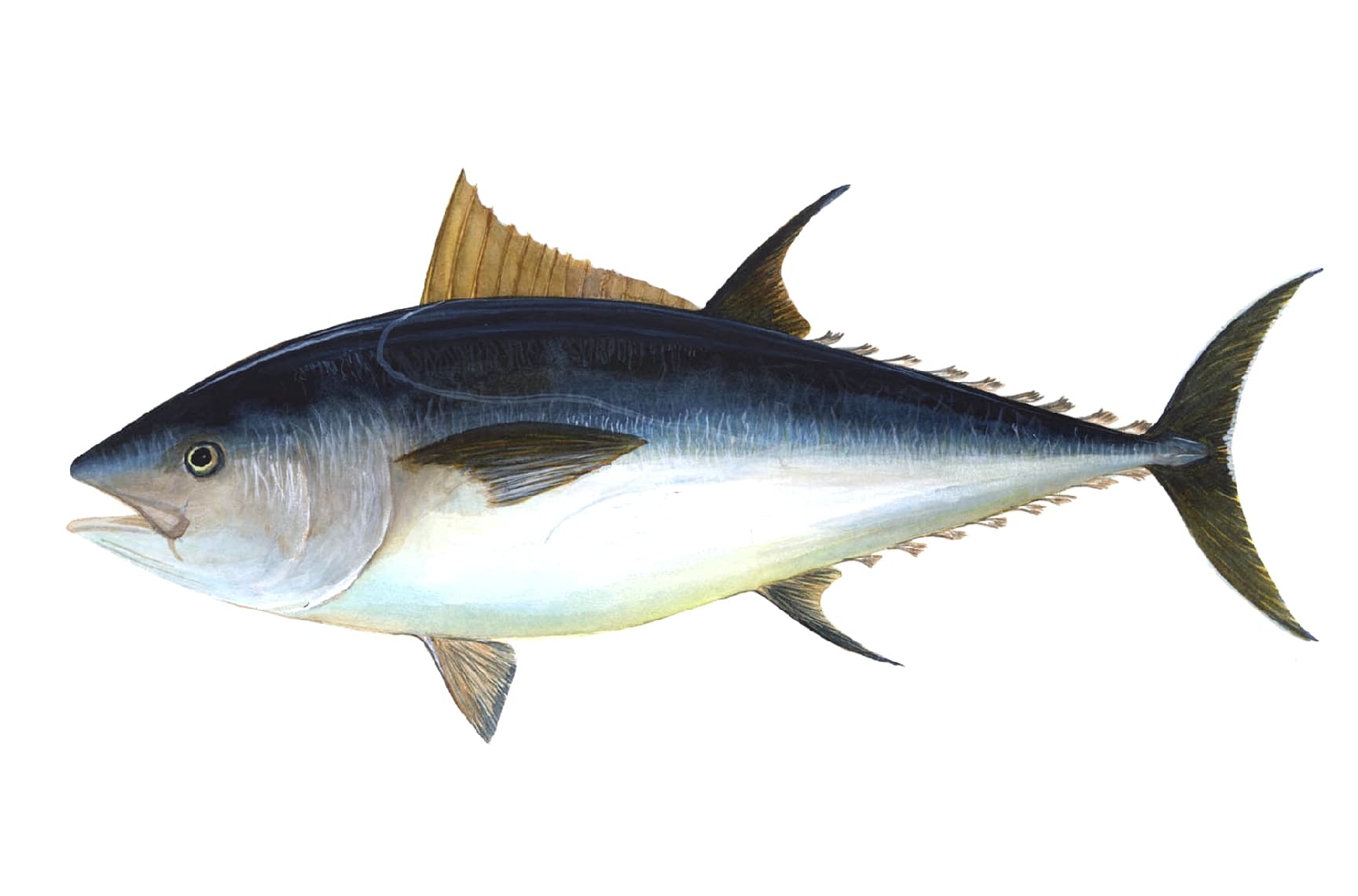
Thunnus thynnus / Thunnus alalunga
Tuna
Tuna is a powerful offshore fish for boats, trolling, and heavy tackle. It is not a beginner shore target.
About this fish
Tuna fishing is a small expedition. Preparation, crew, and safety matter more than one perfect cast.
Where to find it
Look offshore around drop-offs, baitfish, birds, and surface activity.
How to identify it
Torpedo-shaped body, powerful tail, dark back, and silver sides.
How to catch it
Usually targeted from a boat by trolling, jigging, or topwater lures. You need a crew, safety plan, and correct permissions.
Baits and lures
- trolling plugs
- jigs
- poppers
- natural baitfish
Equipment
- heavy boat/trolling setup
- reliable reel, strong drag, and heavy leader
- poppers, jigs, trolling lures, and secured tackle
- life jacket, communications, forecast, first-aid kit, and experienced skipper
- 1.Do not go without forecast checks, life jackets, communications, and an experienced skipper.
- 2.Look for birds and boils: tuna often reveals itself at the surface.
- 3.After the strike, do not rush: keep rod angle and work with the drag.
Handling and rules
Not venomous, but very powerful. The danger is hooks, fish weight, boat movement, and angler fatigue.
For boat tuna fishing, check DFMR permissions, season, limits, and reporting before going out.
Where it lives in this guide
Forecast for Ayia Napa Coast
Loading forecast…
What difficulty means
It is not fish size or danger. It means how hard it is to consistently find, trigger, and catch the species in real Cyprus conditions.
Beginner-friendly: simple tackle, clear bites, and less demand for perfect presentation.
Gear. Float rod, feeder, or simple bottom rig; small set of hooks, weights, and bait.
Weather. Best with wind under 18 km/h, moderate UV, and low rain chance.
Requires reading the spot: depth, wind, cover, fish activity, and retrieve speed.
Gear. Bring 2-3 methods, spare leaders, different weights/lures, and unhooking tools.
Weather. Wind at 18-28 km/h affects casting; watch gusts, pressure, and swell.
Hard to catch consistently: the species may be rare, local, seasonal, depth-sensitive, weather-sensitive, or active only in short windows.
Gear. Tackle depends on method and spot. Having options, patience, and spot-reading matters more than one 'correct' rig.
Weather. Watch activity windows: wind, pressure, clarity, water level, current, and light can matter more than the lure.