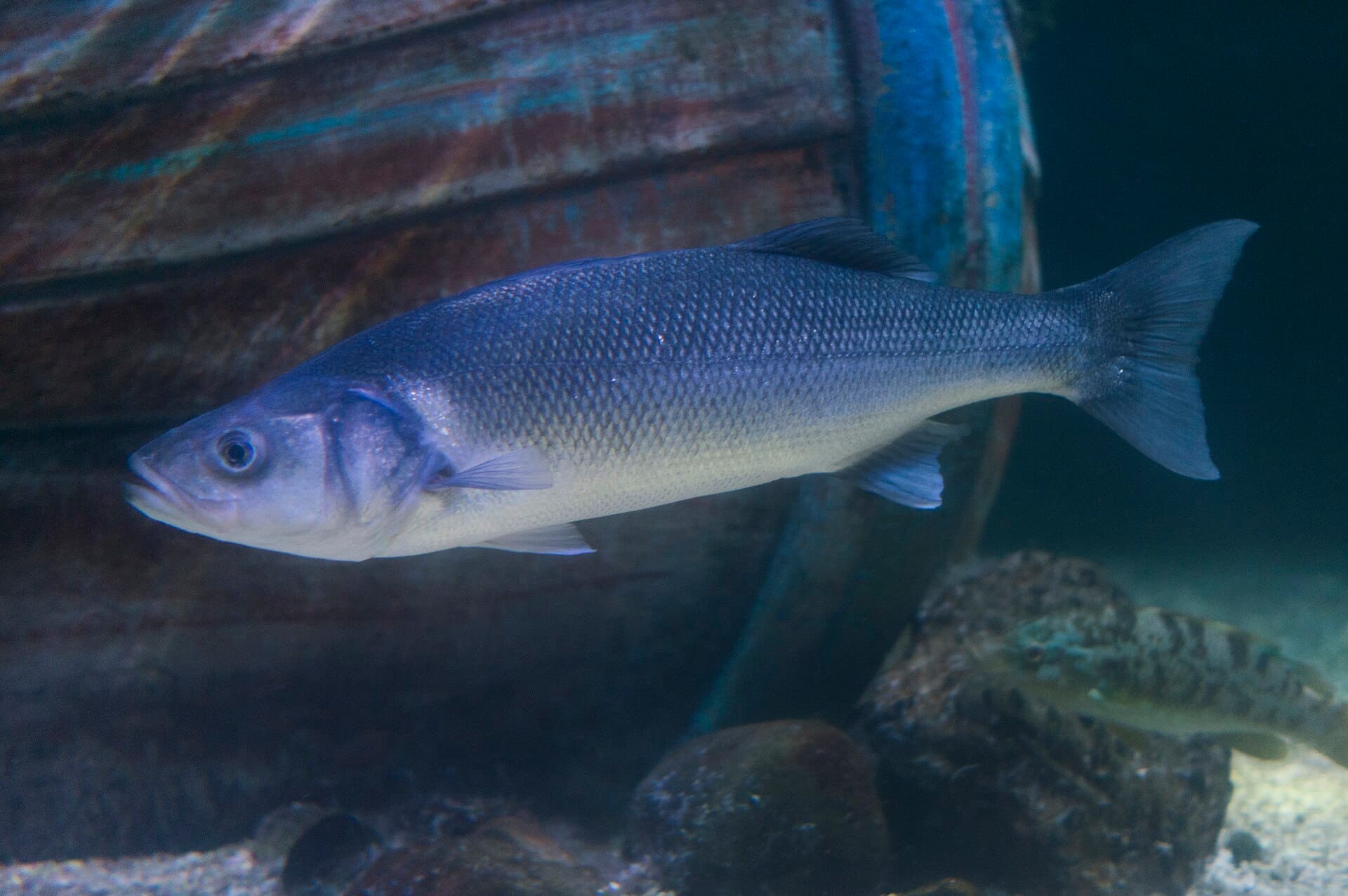
Dicentrarchus labrax
Sea Bass
Sea bass is a cautious coastal predator often found in surf, rocks, breakwaters, and harbour entrances.
About this fish
Sea bass often arrives with moving water. If the sea is flat, find current; if there is surf, work the foam edge.
Where to find it
Good areas include surf foam, rock lines, current, estuaries, and places where baitfish are pushed to shore.
How to identify it
Silver elongated body, large head, spiny dorsal fin, and strong tail.
How to catch it
Use minnows, soft plastics, or small metals. Dawn, dusk, and slight surf are often best.
Baits and lures
- 9-13 cm minnows
- soft paddle tail
- metal jig
- shrimp or worm
Equipment
- sea tackle matched to the style: light for rockfishing and small fish, stronger for distance or larger predators
- line/braid, leader, and strength matched to rocks, teeth, current, and fish size
- minnows, soft plastics, metal jigs, and saltwater clips
- rock shoes, net/lip grip, and headlamp
- 1.Stand safely above the surf and avoid wet rocks.
- 2.Retrieve slowly with pauses along the foam line.
- 3.In clear water, downsize the lure and use a thinner leader.
Handling and rules
Not venomous, but fins are spiny. Use a net or lip grip and keep fingers away from gills.
Sea shore fishing usually needs no license, but minimum sizes, closed areas, and limits must be checked.
Where it lives in this guide
Forecast for Limassol Coast
Loading forecast…
What difficulty means
It is not fish size or danger. It means how hard it is to consistently find, trigger, and catch the species in real Cyprus conditions.
Beginner-friendly: simple tackle, clear bites, and less demand for perfect presentation.
Gear. Float rod, feeder, or simple bottom rig; small set of hooks, weights, and bait.
Weather. Best with wind under 18 km/h, moderate UV, and low rain chance.
Requires reading the spot: depth, wind, cover, fish activity, and retrieve speed.
Gear. Bring 2-3 methods, spare leaders, different weights/lures, and unhooking tools.
Weather. Wind at 18-28 km/h affects casting; watch gusts, pressure, and swell.
Hard to catch consistently: the species may be rare, local, seasonal, depth-sensitive, weather-sensitive, or active only in short windows.
Gear. Tackle depends on method and spot. Having options, patience, and spot-reading matters more than one 'correct' rig.
Weather. Watch activity windows: wind, pressure, clarity, water level, current, and light can matter more than the lure.