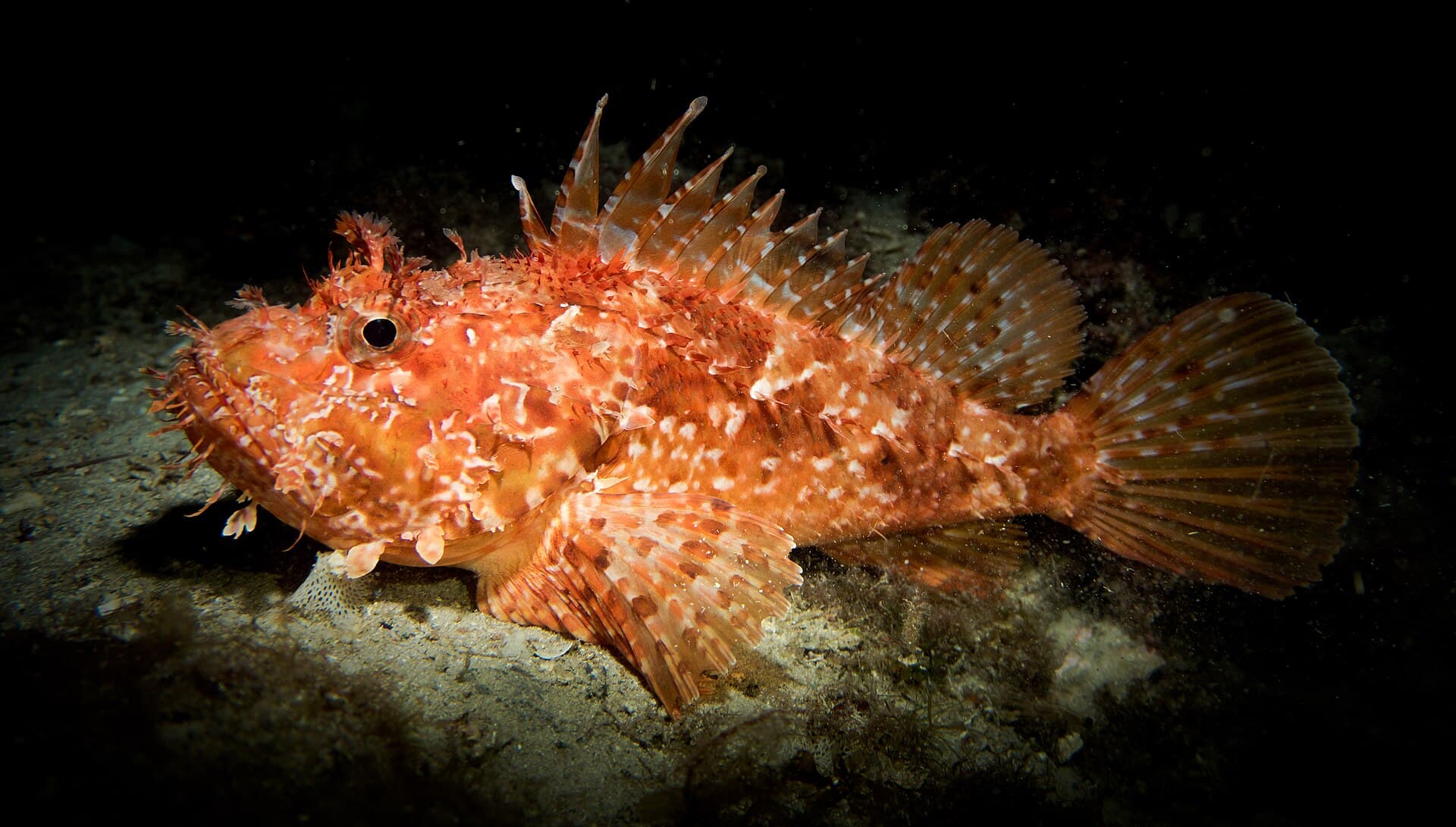
Scorpaena scrofa
Scorpionfish
Scorpionfish is a camouflaged bottom fish with venomous spines. It often sits among rocks and looks like part of the bottom.
Danger and handling
Venomous fin spines. Do not handle by hand; use tools and a rigid bucket/container.
May be caught from shore, but check minimum sizes and zones. If unsure, release safely.
About this fish
Scorpionfish reminds you that dangerous fish do not always look aggressive. Sometimes they simply wait on the bottom.
Where to find it
Rocks, reefs, deep cracks, harbour walls, and bottom cover.
How to identify it
Large head, rough body, reddish-brown colour, and rock-like camouflage.
How to catch it
It can take bottom rigs around rocks. For beginners, safe unhooking matters more than targeting it.
Baits and lures
- fish strip
- shrimp
- bottom rig
- long pliers
Equipment
- bottom rig near rocks, but not a beginner target
- long pliers and rigid bucket/container
- rock shoes and lamp for evening
- knowledge of venomous spine positions
- 1.If you catch one, secure the rod first and identify the spines.
- 2.Use pliers and do not squeeze the fish from above.
- 3.If stung, do not keep fishing through the pain.
Where it lives in this guide
Forecast for Limassol Coast
Loading forecast…
What difficulty means
It is not fish size or danger. It means how hard it is to consistently find, trigger, and catch the species in real Cyprus conditions.
Beginner-friendly: simple tackle, clear bites, and less demand for perfect presentation.
Gear. Float rod, feeder, or simple bottom rig; small set of hooks, weights, and bait.
Weather. Best with wind under 18 km/h, moderate UV, and low rain chance.
Requires reading the spot: depth, wind, cover, fish activity, and retrieve speed.
Gear. Bring 2-3 methods, spare leaders, different weights/lures, and unhooking tools.
Weather. Wind at 18-28 km/h affects casting; watch gusts, pressure, and swell.
Hard to catch consistently: the species may be rare, local, seasonal, depth-sensitive, weather-sensitive, or active only in short windows.
Gear. Tackle depends on method and spot. Having options, patience, and spot-reading matters more than one 'correct' rig.
Weather. Watch activity windows: wind, pressure, clarity, water level, current, and light can matter more than the lure.