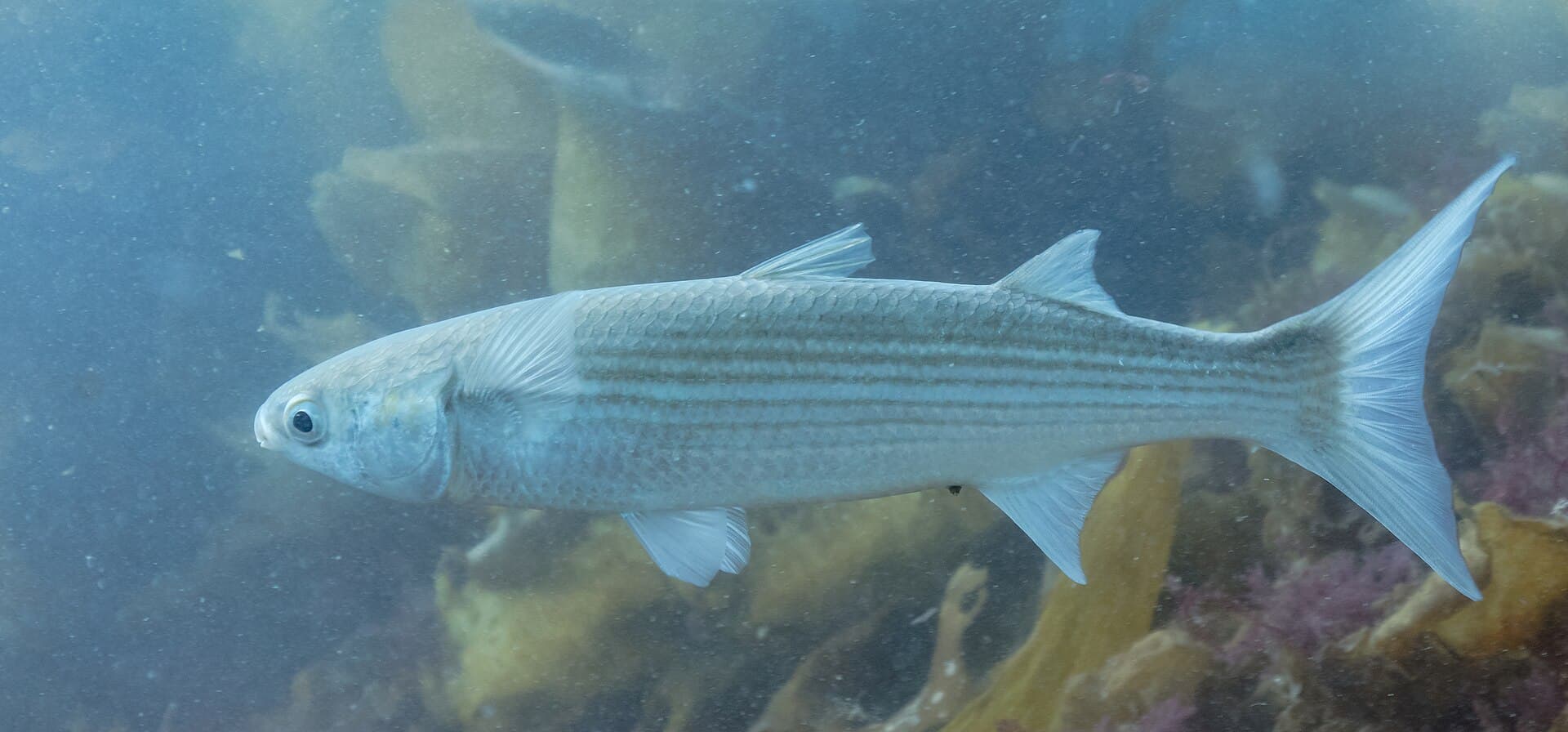
Mugil cephalus
Mullet
Mullet is often visible near the surface in harbours, lagoons, and calm shores. It requires delicate tackle.
About this fish
Mullet is a fish of observation. Sometimes it is right in front of you, but only bites when the rig is nearly invisible.
Where to find it
Look for schools in calm water, harbours, beaches, estuaries, and areas with organic food.
How to identify it
Elongated silver body, flat head, small mouth, and often visible surface schools.
How to catch it
Use a light float, small hook, and bread bait. Bread groundbait helps keep the school nearby.
Baits and lures
- bread
- dough
- small marine worm
Equipment
- light float setup and a longer rod
- leaders, sinkers, and hooks in several sizes matched to swell, bottom, and bait
- small hooks, bread groundbait, and sensitive float
- polarized glasses to spot schools
- 1.First spot a school visually without making noise.
- 2.Throw tiny bread crumbs, then present the hook in the same area.
- 3.Use a thin leader because mullet spooks easily.
Handling and rules
Not venomous. It is slippery, so use wet hands or a landing net.
Shore fishing usually needs no license; check zones, especially around harbours and beaches.
Where it lives in this guide
Forecast for Limassol Coast
Loading forecast…
What difficulty means
It is not fish size or danger. It means how hard it is to consistently find, trigger, and catch the species in real Cyprus conditions.
Beginner-friendly: simple tackle, clear bites, and less demand for perfect presentation.
Gear. Float rod, feeder, or simple bottom rig; small set of hooks, weights, and bait.
Weather. Best with wind under 18 km/h, moderate UV, and low rain chance.
Requires reading the spot: depth, wind, cover, fish activity, and retrieve speed.
Gear. Bring 2-3 methods, spare leaders, different weights/lures, and unhooking tools.
Weather. Wind at 18-28 km/h affects casting; watch gusts, pressure, and swell.
Hard to catch consistently: the species may be rare, local, seasonal, depth-sensitive, weather-sensitive, or active only in short windows.
Gear. Tackle depends on method and spot. Having options, patience, and spot-reading matters more than one 'correct' rig.
Weather. Watch activity windows: wind, pressure, clarity, water level, current, and light can matter more than the lure.